My honest take on AI and the design canvas
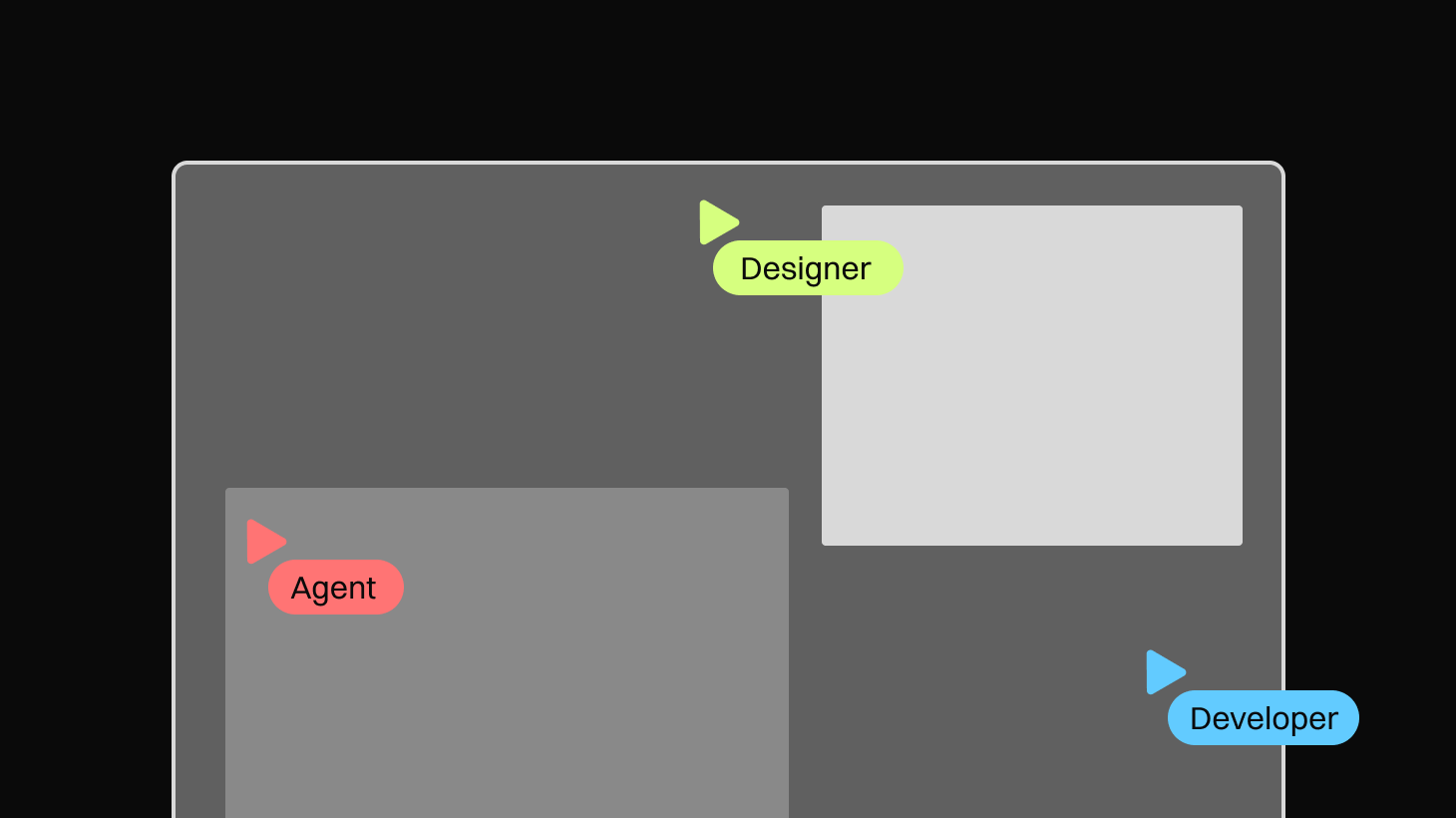
Last week I spent an afternoon laying out a hero section I already knew wouldn’t be built as-is. That’s not a problem. That’s the point. I was trying to feel out whether the concept held weight before anyone wrote a line of code. The canvas gave me an answer in three hours that a conversation would have taken three days to land.
I use Claude Code a lot. Not occasionally. It’s a core part of how I work now. I’ve shipped things with it I couldn’t have shipped two years ago: production-level vanilla JS, real deadlines, good output. Infinite sliders with inertia, seamless drag behaviours, the kind of implementation detail that used to eat days. I’m not watching this from the outside.
But here’s what I’ve learned from actually doing it: if you want to get anywhere good with AI, there’s a lot of hand holding, prompting and iteration involved. It doesn’t just produce great work. You have to direct it. And the fastest way I’ve found to know what I want it to build is to work it out on the canvas first. Not as a deliverable. As a thinking tool. The clearer the visual intent going in, the better the output coming out.
That’s the thing I keep coming back to whenever someone says the canvas is dying. It isn’t. It’s still the fastest way to find out if an idea works. And increasingly, it’s how I get AI to work better too.
World-class layouts don’t happen in a prompt. They happen when you’re moving things around, killing options, second-guessing the grid, trying a typeface because something in you said yes and then undoing it thirty seconds later. That process needs a surface. It needs speed. The canvas gives you both. Not because it’s traditional. Because it’s genuinely the right tool for that stage of thinking.
I’ve been watching AI-directed work closely. You can spot it. Not always immediately, but it has a signature. The font pairings trend toward the same five combinations. The gradients hit the same tonal ranges. The spatial relationships are just kind of… fine. Nothing is wrong, nothing surprises you, nothing earns a second look.
This isn’t a knock on the models. It’s an honest description of what they can and can’t do right now. Visual reasoning is still weak. Spatial judgment, the thing that makes a designer go “no, this doesn’t feel right” before they can explain why, that isn’t in the models yet. When it is, this conversation changes. But right now, that’s the gap the canvas fills. Not nostalgia. Capability.
Something that doesn’t get said enough: AI is closing the distance between what a designer imagines and what a developer can build, and that’s actually a good thing.
Developers used to spend a meaningful portion of their time on setup, documentation, boilerplate. The boring scaffolding that has to exist but doesn’t require judgment. That friction is mostly gone now. Which means when a developer sits down to execute on a design, they can go further. They can care more about the craft because the tedious stuff isn’t eating their energy first.
I feel this when I work with developers now. The conversation is different. We’re talking about edge cases, interactions, the feel of a thing. Not “how long will it take to set up the environment.” The gap between design intent and built reality is narrowing, and it’s narrowing on the right end.
Tools are feeling this. Webflow and Framer built their businesses on a clear premise: there’s a gap between design and code, and we live in it. That was a real gap, and it was genuinely useful. But when spinning up a functional site becomes trivially cheap, the value of sitting in the middle gets harder to defend.
This doesn’t mean those tools disappear. Webflow is leaning into AI hard. Framer built canvas and workshop modes, showing they understand that the interface layer still matters. Even Figma isn’t immune. They’ve been building MCP bridges, which makes sense, but there’s real competition now from tools that are native to that environment rather than adapting to it.
The ones that survive will be the ones that find a new reason to exist. Not the ones that just argue the old position harder.
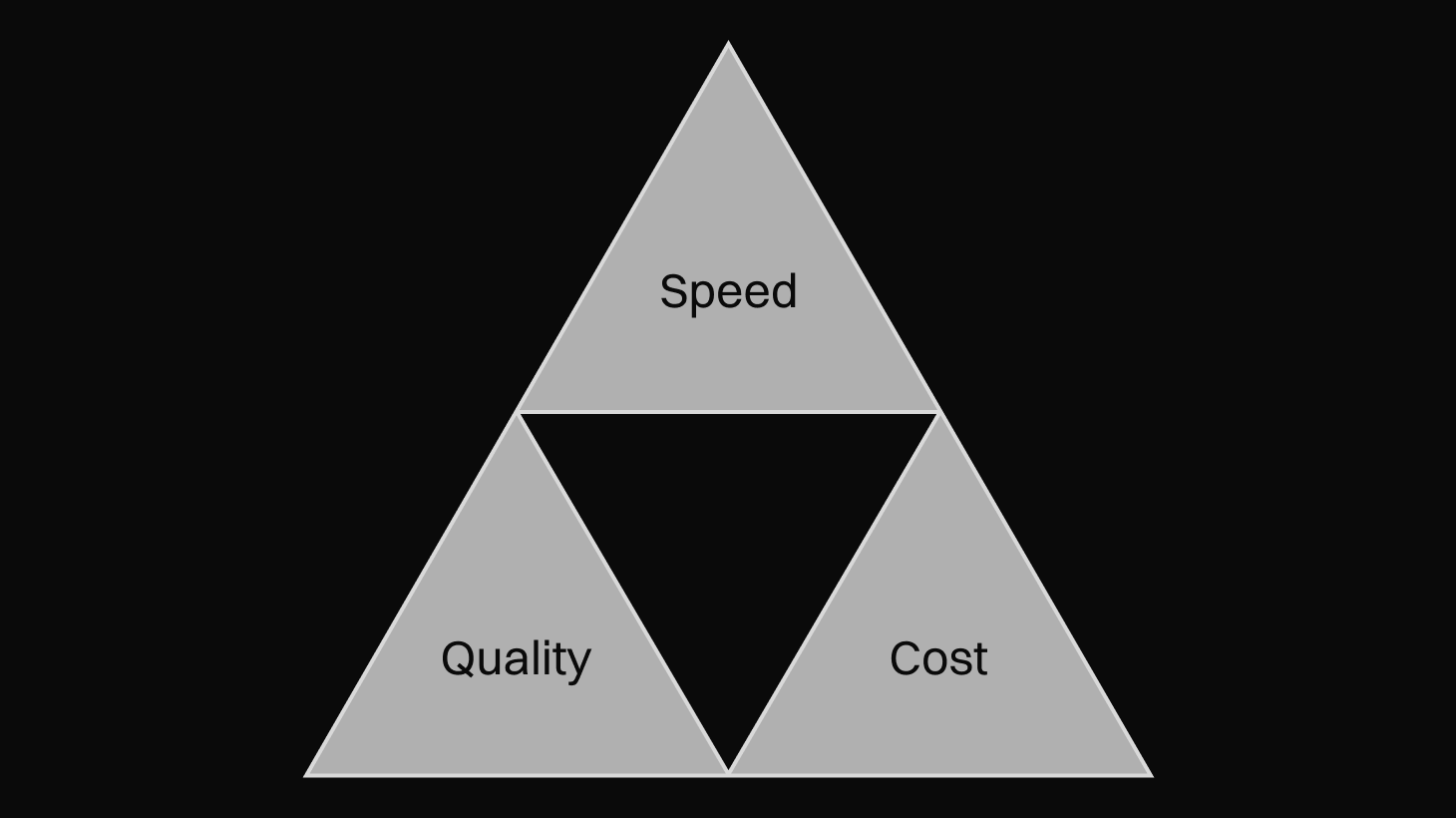
The iron triangle is a useful lens here. Speed, quality, cost. Pick two.
AI gives you speed and cheap. If you’re fine with average, that’s a completely legitimate trade. More businesses will have a decent digital presence. The bar for basic just got higher, which is fine.
But if you want extraordinary, the craft still has to go in. You can’t prompt your way to a layout that stops someone mid-scroll. You can’t skip the iteration. You can’t automate the judgment call that makes something land differently from everything else they’ve seen that day.
Some clients are genuinely happy with average. They know their audience isn’t looking for extraordinary, they need functional and fast. That’s a valid brief. The clients who aren’t happy with average still need people who put craft first. Those two markets are both real. They’re just not the same market anymore.
Where does this end up? Honestly, I think the role sharpens rather than shrinks. The more AI levels up the floor, the more the ceiling matters to the people who care about it. The designers and developers who are obsessive about craft, who know the difference between a composition that works and one that resonates, those people become more distinct, not less.
The canvas isn’t going anywhere. Not yet. And the skill to use it well is worth more, not less, in a world where most things are being generated.
That’s what I actually think. Not optimistic, not anxious. Just honest about where the work still lives.
Dean Hope is an interaction designer.